Zero-Knowledge Proofs for Anonymous Punting: The Privacy Revolution of 2026
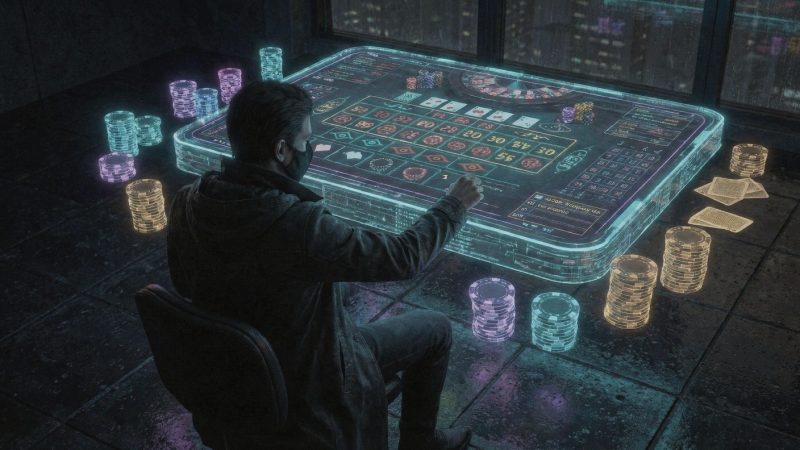
As we navigate the sophisticated digital landscape of 2026, the most significant tension in our industry has finally been resolved. For years, we faced a binary choice: total transparency with invasive data collection, or total anonymity which often invited illicit activity. Today, as a representative of a leading global ecosystem, I am proud to showcase the integration of Zero-Knowledge Proofs (ZKPs). This mathematical breakthrough has transformed popular gambling architectures into “Trustless Sanctuaries” where the player’s identity is never revealed, yet their eligibility is never in doubt. We have moved beyond the era of the “Data Honeypot,” where centralized servers stored millions of passport scans. In 2026, we prove truths without sharing facts, creating a punting environment that is both invisible and invincible.
The Philosophical Shift: From Identity to Eligibility
The fundamental problem with legacy digital wagering was the requirement to prove who you were to prove you were allowed to play. In my experience, this was always a flawed premise. We don’t actually need to know your name, your home address, or your mother’s maiden name to let you place a bet. We only need to know three things: Are you of legal age? Are you in a permitted jurisdiction? And do you have the funds to cover the wager?
In 2026, Zero-Knowledge Proofs allow us to decouple “Identity” from “Eligibility.” Using ZK-cryptography, a player can provide a mathematical proof that they meet all these criteria without revealing a single byte of the underlying data. It is the digital equivalent of showing a bouncer a light that turns green if you are over 18, rather than handing over an ID card that shows your height, weight, and home address. This shift has fundamentally restored the “Right to be Forgotten” for the modern punter.
Understanding the Mechanics: ZK-SNARKs and STARKs
To appreciate the expert-level implementation of this technology, one must understand the tools we use. In our 2026 infrastructure, we primarily utilize ZK-SNARKs (Zero-Knowledge Succinct Non-Interactive Argument of Knowledge). These are compact, easily verifiable proofs that allow for nearly instant punting sessions.
How a ZK-Proof Transaction Flow Works
When a player initiates a session on our platform, the process is entirely different from the clunky “Upload your ID” days of 2023.
- The User Side: The player’s local device (or a trusted decentralized identity provider) generates a cryptographic proof. This proof uses a “Witness” (the actual data) to create a “Statement” (the proof of eligibility).
- The Verification: Our platform receives the proof. Our smart contracts check the mathematical validity of the proof against the public blockchain.
- The Access: If the math checks out, the session is opened. We have verified the player is 100% compliant, but our servers still have zero knowledge of who that player actually is.
ZK-STARKs for Long-Term Quantum Security
For our high-stakes and institutional-grade punters, we have begun implementing ZK-STARKs. While slightly larger in data size, these are “Scalable Transparent Arguments of Knowledge” that do not require a “Trusted Setup.” More importantly, they are quantum-resistant. As we move closer to the era of quantum computing, ensuring that the anonymity of our 2026 users remains protected for the next fifty years is a top priority for my technical team.
Comparing Traditional KYC vs. ZK-Proof Verification
The following table highlights the radical efficiency gains we have achieved by moving away from centralized data storage and toward decentralized proofs.
| Feature | Traditional KYC (Pre-2024) | ZK-Proof Punting (2026) |
| Data Stored by Casino | Name, DOB, Passport, Utility Bills | Zero personal data (Only Proof Hashes) |
| Risk of Identity Theft | High (Centralized database leaks) | Zero (No data exists to be stolen) |
| Verification Speed | Hours to Days (Manual review) | Milliseconds (Algorithmic) |
| Player Privacy | Poor (Casino knows everything) | Absolute (Casino knows nothing) |
| Regulatory Compliance | Reactive and prone to human error | Proactive and mathematically guaranteed |
| Global Portability | Limited (New docs for each site) | Universal (One ID, many proofs) |
The End of the “Data Honeypot” Liability
From my perspective as an operator, the greatest benefit of ZKPs isn’t just for the player; it’s for us. In the old world, personal data was a massive liability. Storing PII (Personally Identifiable Information) required millions in insurance, complex GDPR/CCPA compliance departments, and a constant fear of the next big hack.
By 2026, we have essentially “de-risked” our servers. Since we don’t store your data, we cannot lose your data. If a malicious actor were to breach our primary database today, they would find nothing but millions of cryptographic proof-strings. These are useless without the player’s private keys. This has allowed us to redirect our resources from “data policing” to “game innovation,” resulting in a much more vibrant and exciting gaming ecosystem.
ZKPs and Provably Fair Anonymity
The use of Zero-Knowledge Proofs in 2026 extends beyond just identity; we also use them to prove the integrity of the games themselves. “Anonymous Punting” doesn’t just mean the house doesn’t know you; it means the house cannot target you.
Preventing Algorithmic Bias
In the past, there was always a lingering fear that if a casino knew a player was a “whale” or a “pro,” they could subtly adjust the experience. With ZKPs, the game engine is blind to the individual. The engine only sees a “Valid Player.” We use ZK-proofs to show that the Random Number Generator (RNG) used for a specific spin was generated fairly, without revealing the secret “seeds” that could be exploited by hackers. This creates a “Double-Blind” environment where neither the player nor the house can gain an unfair informational advantage.
The Regulatory Perspective: Math as the Ultimate Auditor
You might wonder how regulators in 2026 feel about “Anonymous Punting.” Interestingly, they have become our biggest supporters. Regulators have realized that manual KYC checks are easily faked with deepfakes and high-quality forgeries. Cryptographic proofs, however, cannot be forged.
The Rise of “Reg-Tech” Smart Contracts
We now provide regulators with a “View Key” to our ZK-verification smart contracts. They can see in real-time that every single active player on our platform has provided a valid, mathematically sound proof of age and location. The regulator gets 100% certainty that the laws are being followed, while the player gets 100% privacy. It is the first time in the history of the industry that government oversight and personal liberty are not at odds.
Multi-Chain Privacy and Interoperability
In 2026, our punters aren’t limited to one blockchain. We use “Cross-Chain ZK-Bridges.” A player can hold their identity on the Ethereum Attestation Service (EAS) but place a bet on a high-speed Layer 2 or a specialized gaming chain like Solana or Avalanche. The ZK-proof travels across the bridge, maintaining the player’s anonymity while allowing them to move their liquidity wherever the best odds and games are found. This interoperability has created a truly global, private liquid market for punting.
Frequently Asked Questions
What exactly is a Zero-Knowledge Proof in simple terms?
It is a way to prove you know a secret or meet a certain requirement without revealing the secret itself. Think of it like proving you have the key to a safe by showing you can open it, without ever giving anyone a copy of the key or letting them see what is inside the safe.
Does anonymous punting mean I can bet from anywhere?
No. The ZK-proof still verifies your location. If you are in a jurisdiction where wagering is restricted, the proof will fail to generate or be rejected by the platform. The difference is that the platform doesn’t know exactly where you are (your home address), only that you are within a “permitted zone.”
Is ZK-technology slower than regular logins?
In the early days, generating proofs was slow. However, by 2026, hardware acceleration on smartphones and “Succinct” proof technology (SNARKs) mean that a proof is generated and verified in less than a second. It is often faster than waiting for a legacy site to process a password and two-factor authentication code.
Can I be tracked by my wallet address?
We utilize “Stealth Addresses” and “ZK-Mixers” in 2026. Every time you interact with our platform, a new, one-time-use address can be generated. This breaks the link between your main wallet and your punting history, making on-chain tracking nearly impossible for outside observers.
How do I know the casino isn’t keeping a “backdoor” list of identities?
Reputable 2026 platforms use open-source smart contracts. You can check the code to see that there is no function to “capture” or “store” the data used to generate the proof. The verification happens entirely in a decentralized environment, where we as the operator have no technical way to “see” your identity.
What happens if I lose my ZK-Identity?
Because your identity is decentralized (usually tied to your own biometric hardware or a social recovery wallet), you can recover it without a central authority. You don’t “call the casino” to reset your identity; you use your pre-set recovery “guardians” on the blockchain.
Are ZK-proofs legal according to the latest 2026 regulations?
Yes. Most modern jurisdictions have passed “Algorithmic Identity” laws. These recognize a valid ZK-proof as a legal substitute for traditional KYC, provided the proof is generated by a certified, licensed identity provider.
Does this technology help prevent problem gambling?
Yes, in a more private way. We use “Private Behavioral Analytics.” The AI can detect patterns of “at-risk” play and send a signal to the player’s wallet to trigger a “cool down.” The casino doesn’t need to know who the player is to enforce a self-exclusion or a limit set by the player themselves.
Can ZK-proofs be hacked or forged?
The math behind ZK-SNARKs and STARKs is considered some of the most secure in the world. Forging a proof would require solving a mathematical problem that even the world’s most powerful supercomputers cannot crack in 2026. It is significantly more secure than traditional database storage.
Do I need to be a tech expert to use a ZK-Casino?
Not at all. The technology is hidden behind the UI. You simply click “Connect Wallet” and approve a prompt on your phone. The complex math happens in the background. If you know how to use a digital wallet, you know how to use ZK-Punting.
Conclusion
The implementation of Zero-Knowledge Proofs in 2026 marks the arrival of the “Sovereign Punter.” We have finally broken the cycle of data exploitation and centralized vulnerability that defined the first two decades of online gaming. By embracing the power of mathematics, we have created an ecosystem where privacy is not a feature but a fundamental right. Players can now engage with their favorite games with the absolute certainty that their personal lives remain private, their funds remain secure, and their eligibility is verified by an unhackable algorithm rather than a fallible human.
As we look toward the future, the “ZK-Standard” will only become more integrated. We are already seeing the emergence of “Zero-Knowledge Credit Scores,” which will allow players to prove their financial health for high-stakes play without revealing their bank balances. My commitment to this industry is to ensure that we never go back to the days of “Data Honeypots.” The future of wagering is private, it is compliant, and it is powered by the invisible, unbreakable logic of Zero-Knowledge. We have moved the industry from a foundation of “Trust Me” to a foundation of “Verify the Math,” and in doing so, we have made the gaming world a safer, more honorable place for everyone.