The Rise of Skill-Based Slots in 2026: The Intersection of Talent and Chance
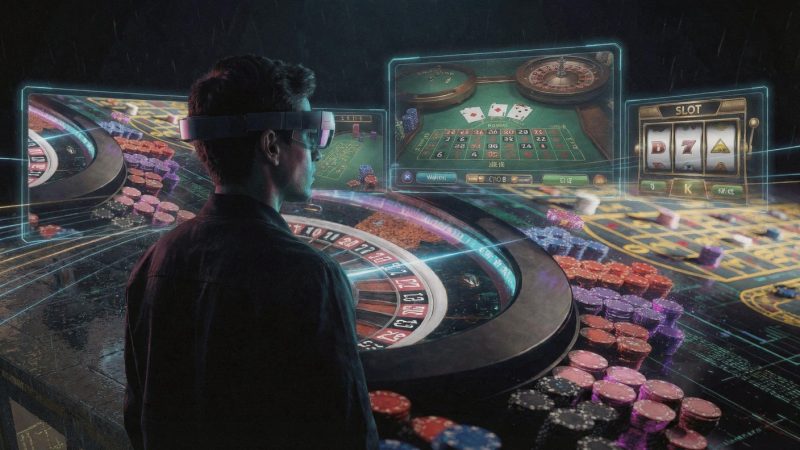
As a representative of the global digital wagering industry, I have spent the last decade watching the slow but inevitable convergence of video games and traditional gaming platforms. We have reached a point in 2026 where the “spin and hope” model is no longer the undisputed king of the floor. The modern player, raised on high-octane competitive shooters and complex strategy titles, finds the passive nature of legacy machines somewhat lacking. This is why Skill-based slots 2026 have become our fastest-growing sector. We are witnessing a fundamental shift in the social contract between the player and the house. No longer are users content to let a hidden Random Number Generator (RNG) dictate their entire fate. They want agency, they want a challenge, and they want their cognitive or physical dexterity to have a measurable impact on their potential returns.
The Generational Mandate: Why Pure Luck is Fading
The rise of these interactive experiences is not an accident of technology, but a response to a generational mandate. Millennials and Gen Z players, who now form the backbone of our active user base, grew up in an era where mastery was rewarded with progress. To them, a game that offers no opportunity for improvement feels like a closed loop.
In my discussions with game architects, we focus on the concept of “The Agency Gap.” Traditional slots are high in excitement but low in agency. Skill-based titles bridge this gap by introducing phases where the player’s input directly influences the outcome. We aren’t removing the luck element, as the core of any wagering product must remain grounded in probability, but we are layering skill on top of it. This creates a much more engaging “Flow State,” where the player feels they are being rewarded for their attention and talent rather than just their persistence.
Anatomy of a Modern Skill-Based Slot
To understand how these games operate in 2026, you have to look past the symbols on the reels. A modern skill-based machine is a hybrid creature, often split into two distinct operational phases.
The RNG Base and the Skill-Triggered Bonus
The majority of these games still utilize a standard RNG for the base game to ensure mathematical stability. However, the true innovation lies in how the bonus rounds are executed. Instead of a “pick-a-box” screen, the player might be transported into a first-person shooter sequence, a rhythm-based music challenge, or a complex physics puzzle.
In these sequences, your performance determines the multiplier applied to your triggering bet. A player with exceptional reflexes might unlock a 50x multiplier, while a casual player might only achieve 10x. This creates a spectrum of Return to Player (RTP) percentages that fluctuate based on performance, a concept we call “Variable Yield Architecture.”
Dexterity, Logic, and Strategy Components
We have categorized these interactive elements into three primary pillars:
- Dexterity: Fast-twitch muscle responses, such as shooting targets or navigating an avatar through an obstacle course.
- Logic: Puzzle-solving elements where the speed and accuracy of the solution dictate the reward.
- Strategy: Resource management games where players must decide how to spend “power-ups” to maximize their long-term win potential within the round.
Balancing the Math: The Expert Perspective on RTP
The most common question I receive from partners is how we maintain a house edge when the player can “get good” at the game. The answer lies in the mathematical “Floor and Ceiling” model. We design these games with a guaranteed minimum RTP (the Floor) and a maximum potential RTP (the Ceiling) for perfect play.
| Feature | Traditional RNG Slot | Skill-Based Hybrid (2026) |
| Core Mechanic | Passive button pressing | Active input and decision making |
| RTP Structure | Fixed (e.g., 96%) | Variable (e.g., 88% to 98%) |
| Player Engagement | Short, repetitive bursts | Long, narrative-driven sessions |
| Mastery Potential | Zero (pure luck) | Significant (practice improves results) |
| Target Demographic | Casual, older audience | Competitive, younger audience |
By setting the “Ceiling” at a point that still respects the house’s operational needs (for example, 98% or 99% for professional-level play), we ensure that the game remains a viable business product while giving the player a tangible reason to practice and improve. It transforms the player from a passive observer into a “pro-am” athlete of the digital floor.
Regulatory Landscape in 2026: Defining Fair Skill
As an industry representative, I spend a significant amount of time working with regulators to define what “fair skill” looks like. The challenge in 2026 is ensuring that the skill component is not a “trap.” Regulators require that the difficulty of the skill phase is transparent and that the game does not artificially inflate difficulty just because a player is winning.
We utilize AI to monitor the “Skill Curve.” If a game is too difficult, players become frustrated and leave. If it is too easy, the house edge evaporates. The goal is “Dynamic Difficulty Adjustment” (DDA) that keeps the player in the sweet spot of challenge. However, this DDA must be clearly disclosed. Players in 2026 are savvy; they know when a game is pushing back against them, and they demand honesty in how those mechanics are implemented.
Technology Driving the Change: AI and Haptics
The sheer quality of skill-based slots in 2026 is a result of massive leaps in mobile processing power and haptic feedback technology. When you are playing a racing-themed slot, your phone’s haptic engines provide granular feedback that lets you “feel” the traction of the tires. This tactile data is essential for high-level skill play.
Dynamic Difficulty and Player Profiling
Our platforms now use machine learning to create an “Evolutionary Game State.” The AI observes your playstyle and, over time, can suggest skill-based titles that match your specific talents. If you are excellent at pattern recognition but have slower reflexes, the system will steer you toward puzzle-based slots. This hyper-personalization ensures that every player has a fair shot at hitting that “RTP Ceiling,” making the experience feel personalized and deeply rewarding.
The Social and Competitive Dimensions: The Esports-ification of Slots
One of the most exciting trends I have seen in 2026 is the “Esports-ification” of the slot floor. We are no longer just playing against the machine; we are playing against each other. Skill-based slots have birthed a new era of competitive tournaments.
We now host “Sync-Play” events where hundreds of players enter the same skill-based bonus round simultaneously. The top performers on the leaderboard receive a larger share of a centralized prize pool. This turns the solitary act of playing a slot into a community event. I have seen players forming teams, sharing strategies for specific puzzle rounds, and even streaming their sessions on platforms like Twitch and Kick to show off their mastery of a particular game’s mechanics.
Frequently Asked Questions
Can a player actually beat the house in a skill-based slot?
While a highly skilled player can significantly increase their return and reach the “RTP Ceiling,” the games are mathematically designed to ensure the house maintains a small long-term edge. You can win more frequently than in a traditional slot through talent, but the house edge is built into the base math of the game to ensure the platform remains operational.
How much of the game is actually skill versus luck?
In 2026, the standard ratio is usually 70% luck and 30% skill. The base game and the frequency of bonus triggers are still determined by RNG. However, once you enter the bonus phase, your skill can account for a significant portion of the total payout for that round.
Are these games more expensive to play than traditional slots?
The cost per spin is usually identical to traditional slots. The difference is in the “value of time.” Skill-based slots often have longer play sessions because the interactive rounds take more time to complete. This provides more entertainment value for the same wager.
Can I practice these games without wagering real money?
Most of our 2026 titles offer a “Demo Practice Mode.” This allows you to master the mechanics of the skill-based bonus rounds without risking your bankroll. We encourage practice, as a more skilled player is an engaged, long-term player.
Does the game get harder if the AI sees I am a professional gamer?
No, that would violate our “Fair Play” transparency protocols. The difficulty levels are fixed or follow a predictable progression that is the same for every player. The AI might suggest harder games for you if you are talented, but it will not “cheat” by changing the rules mid-game to stop you from winning.
What happens if my internet lags during a skill-based round?
In 2026, we use “State-Sync” technology. If a lag spike occurs, the game detects the latency and can either pause the action or utilize “Client-Side Prediction” to ensure your input is recorded accurately. If the connection drops entirely, the game usually completes the round based on your average performance history to ensure you aren’t penalized for a technical error.
Are skill-based slots available on mobile devices?
Yes, they are primarily designed for mobile. We utilize the touchscreen, gyroscope, and haptic sensors of modern smartphones to create the skill mechanics. Mobile play is actually the preferred way to experience these games due to the intuitive nature of touch controls.
How do regulators ensure these games aren’t targeted at minors?
We use advanced biometric age verification and “Behavioral Profiling.” If the system detects a playstyle that matches a minor or if the biometric check fails, the account is instantly locked. Even though the games look like video games, they are strictly gated behind our multi-layer security infrastructure.
Are there “Professional Slot Players” now?
We have seen the emergence of a “Pro-Am” circuit. While it is difficult to make a living solely on skill-based slots due to the underlying house edge, the most talented players definitely win more often and are frequently invited to high-stakes, skill-based tournaments with massive guaranteed prizes.
Will traditional slots ever disappear completely?
I don’t believe so. There will always be a market for “relaxed play” where users just want to unwind and let the machine do the work. However, I predict that by 2030, skill-based hybrids will make up at least 60% of the total digital gaming market.
Conclusion
The rise of skill-based slots in 2026 represents the most significant paradigm shift in our industry since the transition from mechanical reels to digital screens. We have successfully moved from a “Black Box” model of gaming to a “Glass Box” model, where transparency, interaction, and player talent are at the forefront. By giving players the ability to influence their outcomes, we haven’t just created better games; we have built a more sustainable and ethical relationship with our community. We are no longer asking players to simply “bet and wait”; we are inviting them to compete, to master, and to succeed through their own merits.
As we look to the future, the integration of skill will only deepen. We are already experimenting with “Neural-Link” inputs and advanced AR environments that will make the skill phases of 2027 and 2028 even more immersive. My mission is to ensure that as the technology evolves, we never lose sight of the core purpose of our industry: providing high-quality, fair, and exhilarating entertainment. The era of the passive player is over. The era of the skilled gamer has begun, and the digital floor has never been more exciting.